



Brand: Reliant Lab
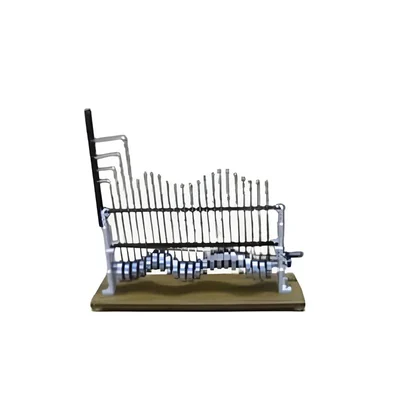
Reliant Lab Wave Motion Apparatus for Demonstrating Reflection and Demonstrating Reflection
SKU: TB-RE-67807 Estimated Delivery By: Oct 13 - Oct 15




MRP : ₹2599 ₹1999
23% OFF!
Estimated Delivery By: Oct 13 - Oct 15 Easy Return
& Refund
& Refund
Quality
Assurance
Assurance
Trusted
Delivery
Delivery
After Sales
Assistance
Assistance
Buyer
Protection
Protection
₹1999 (Including GST)
MRP : ₹2599
23% OFF!
Get Extra ₹30 OFF on Prepaid Orders
QTY :
-
1
+
Short Description
Reliant Lab Wave Motion Apparatus
For Demonstrating Reflection and Demonstrating Reflection
For Demonstrating Reflection and Demonstrating Reflection
Country of origin: India
Specifications
- Brand: Reliant Lab
- Discs material: aluminum
- No. of Discs: 18
- Base: Wooden
Description
The Reliant Lab Wave Motion Apparatus is a visual and mechanical demonstration tool used to illustrate the propagation of wave pulses and standing waves. It typically consists of a series of metal rods or "pendulums" connected by a common torsion wire or high tension spring. When one rod is displaced, the torsional force transmits the energy to the adjacent rods, creating a clear, slow-motion visualization of wave characteristics such as wavelength, amplitude, and phase.
Features
:- High Visibility Rods: Features a series of uniformly spaced horizontal rods, often tipped with brightly colored beads, to make the wave pattern visible from the back of a large classroom.
- Torsion Wire Mechanism: Utilizes a high tensile spring steel wire that provides the restoring force necessary for wave propagation across the rods.
- Friction Reduced Support: The main frame is designed to hold the wire in high tension with minimal dampening, allowing waves to travel the full length of the apparatus.
- Adjustable Damping: Includes a dashpot or a simple friction brake to show how energy dissipation affects wave amplitude over distance.
Applications
:- Demonstrating Reflection
- Superposition and Interference
- Standing Wave Formation
- Phase Relationship Studies
- Wave Speed Analysis
Ask AI

 AI-generated answers may be inaccurate. Double-check critical facts.
 Questions & Answers (0)

Select attribute