- Farm & Garden
- Pumps & Motors
- Food Processing
- Workshop, DIY & MRO
- Lab & Measuring Tools
Product Type
Price
Brands
Stock Availability
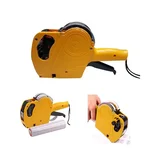
Labelling Machine


/1630409048873JSAP20211708.webp/sm)
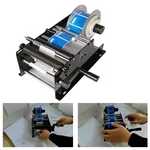
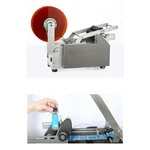
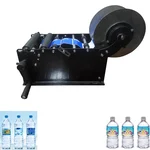

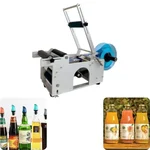
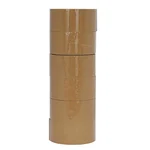
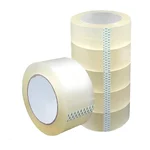
SP Brown BOPP Tape 2 inch X 55 Meter (Pack 6 Pcs)
₹379 ₹479 21% off
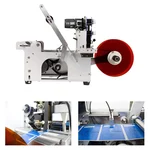
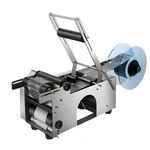
Round Bottle Label Machine 120W with Coding Printing
₹52999 ₹56990 7% off
About Labelling Machine 
Factors to Consider Before Buying a Labelling Machine
Choosing the right labelling machine can make your food packaging process faster, easier, and more accurate. Before you buy, think about these important points to find the best machine for your needs.
Machine Type: Manual, Semi-Automatic, and Automatic
There are three main types of labelling machines: manual, semi-automatic, and automatic. Each type works best for different production sizes and budgets.
Manual
Manual labelling machines require someone to put the labels on the products by hand. They are simple and low cost. These machines work well if you have a small number of products to label. The labelling speed is slower and the accuracy is basic because a person controls the process.
Semi Automatic
Semi automatic labelling machines apply the labels automatically, but someone still places the products or starts the process. They are good for medium-sized production and work faster than manual machines. These machines often use sensors like photoelectric or proximity sensors to place labels more accurately. They can handle different types of labelling such as front and back labelling or wrap-around labelling.
Automatic
Automatic labelling machines do the entire labelling process by themselves. They work best for large production lines and fast labelling speeds. These machines use advanced control systems with touchscreen interfaces. They can handle complex label types like tamper-evident labelling or shrink sleeve labelling. They include many sensors, such as label gap sensors and air pressure sensors, to make sure labels are placed with high precision.
Label Application Type
Your products may need different types of label placement. Some common types are front and back labelling, which puts labels on both sides of the product; top labelling, which puts the label on the top or lid; wrap-around labelling, where the label goes all the way around the container; side labelling, with labels on just one side; tamper-evident labelling, which shows if the product has been opened; pressure-sensitive labelling, which uses sticky labels applied with pressure; and shrink sleeve labelling, where a plastic sleeve shrinks tightly around the product. Make sure your machine supports the label application type you need.
Labelling Speed and Max Output Capacity
Labelling speed is how many labels the machine can apply per minute, called labels per minute or LPM. Choose a machine that can keep up with how many products you need to label each day. Also, check the max output capacity, which is the highest number of products the machine can label without slowing down.
Label Dimensions and Roll Size
Make sure the machine fits your labels. Check the label width, label length, and label roll size that the machine can handle. Using the right size means fewer label roll changes and less downtime.
Product Size Compatibility
Look at the size of your products. The machine should fit the height, width, and shape of your containers. Some machines work better with round bottles, others with flat boxes. Choose a machine that matches your product sizes for the best results.
Power Supply and Consumption
Check the power supply details such as voltage, frequency, and power consumption. The machine should work well with your factory’s electrical system to avoid problems.
Label Material Compatibility
Your labels can be made of paper, plastic, foil, or shrink sleeves. The machine should be able to handle the label materials you use without tearing or misapplying them.
Control System and Interface
Many labelling machines have modern control systems with touchscreen interfaces. These make it easy to set up the machine and make manual adjustments if needed.
Sensors for Accuracy and Precision
Sensors help the machine place labels correctly every time. Common sensors are photoelectric sensors to detect label position; proximity sensors to sense nearby objects; capacitive sensors to detect materials without touching them; ultrasonic sensors to measure distance; air pressure sensors to control pneumatic parts; and label gap sensors to make sure labels are spaced right. These sensors improve the accuracy from basic to high precision depending on the machine.
Conveyor Type and Integration Features
Consider the type of conveyor the machine uses or supports. Belt conveyors provide smooth, steady movement; roller conveyors work well for heavier or flat products; chain conveyors fit large or oddly shaped products; and motorized conveyors offer automatic product feeding. Some machines also offer software integration to work with your other production line equipment. This helps keep everything running smoothly.
Size, Dimension, and Price
Check the machine’s size and dimensions to make sure it fits your workspace. Also, compare labelling machine prices to find a machine that gives you the features you need at a good value.
By thinking about these points, you can pick the best labelling machine for your business. This will help your packaging run faster, keep your products looking great, and reduce errors.
Why Choose Toolsvilla for Labelling Equipment?
Toolsvilla offers many types of labelling machines including manual, semi-automatic, and automatic. These machines can do different kinds of labelling like front and back, wrap-around, and tamper-evident labels.
These are strong and work well with different product sizes and label materials. You will get a good quality labelling machine.. Plus, there is good support to help you if you need it.
Frequently Asked Questions (FAQs)
What is a labelling machine, and how does it work?
A labelling machine is a device that applies labels to products or containers. It works by automatically or manually placing labels on different parts of the product, such as the front, back, side, or top. Some machines use sensors and control systems to place labels accurately and quickly.
What types of products can I label with this machine?
Labelling machines can label many products like bottles, jars, boxes, tubes, and more. They work with products of different sizes, shapes, and materials including round, square, flat, and irregular shapes.
Can this machine handle different label sizes, shapes, and materials?
Yes, many labelling machines can handle a range of label widths, lengths, and materials such as paper, plastic, foil, and shrink sleeves. It is important to check the machine’s specifications to ensure it supports your label type.
Can the labelling machine handle high-speed production lines?
Some labelling machines are designed for high-speed production and can apply many labels per minute (LPM). Automatic machines usually handle high-speed lines better than manual or semi-automatic ones.
What is the difference between automatic and semi-automatic labelling machines?
Automatic machines do the entire labelling process without needing much help from an operator. Semi-automatic machines require an operator to place the product or start the process, but they apply labels automatically. Automatic machines are better for large, fast production, while semi-automatic ones are good for medium volumes.