



Brand: Reliant Lab
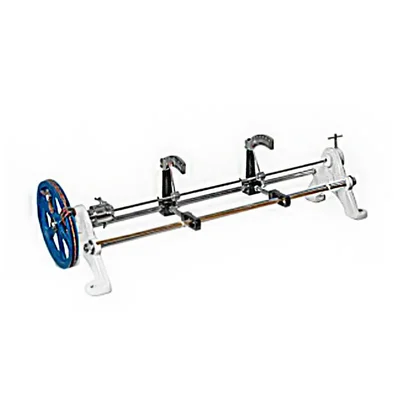
Reliant Lab Torsion Apparatus (Searle’s Type) 1/2 Meter Long
SKU: TB-RE-66455 Estimated Delivery By: Oct 14 - Oct 16




MRP : ₹5199 ₹3499
33% OFF!
Estimated Delivery By: Oct 14 - Oct 16 Easy Return
& Refund
& Refund
Quality
Assurance
Assurance
Trusted
Delivery
Delivery
After Sales
Assistance
Assistance
Buyer
Protection
Protection
₹3499 (Including GST)
MRP : ₹5199
33% OFF!
Get Extra ₹52 OFF on Prepaid Orders
QTY :
-
1
+
Short Description
Reliant Lab Torsion Apparatus
Searle’s Type
1/2 Meter Long
Country of origin: India
Specifications
- Brand: Reliant Lab
- Product Quantity : 1 Piece
- Wheel Dia : 165mm
- Number of Supporting Rod : 2
- No. of Brass Scales Graduated : 2
- Degrees : 30-0-30
- No. of Pointers With Clamp for Attaching to Specimen : 2
Description
The Searle’s Type Torsion Apparatus consists of a horizontal brass or steel rod (the specimen), typically 1/2 meter in length, held firmly at one end by a sturdy wall bracket. The other end of the rod is attached to a graduated circular scale and a pulley system. When weights are added to the hangers attached to the pulley, a twisting couple (torque) is applied to the rod. The resulting angular twist is measured using two pointers that move over circular scales positioned at different points along the rod.
Features
:- 1/2 Meter Rod Capacity: Specifically designed to accommodate specimens of 50 cm, providing a standard length for consistent laboratory calculations.
- Dual Scale Measurement: Features two independent circular scales and pointers to measure the twist at different sections, allowing for the elimination of errors caused by the clamping mechanism.
- Precision Graduated Scales: The circular scales are typically graduated in degrees (0–360°) with fine markings to ensure accurate reading of small angular displacements.
Applications
:- Stress-Strain Relationship: Observing the linear relationship between applied torque and angular twist within the elastic limit of the material.
- Comparative Material Analysis: Comparing the torsional stiffness of various materials (e.g., comparing the rigidity of brass vs. stainless steel).
- Engineering Structural Studies: Helping students understand how shaft length and diameter affect the "twist" in mechanical power transmission components.
- Quality Control Testing: Used in industrial settings to check the consistency and tempering of metal rods and wires.
Ask AI

 AI-generated answers may be inaccurate. Double-check critical facts.
 Questions & Answers (0)

Select attribute